
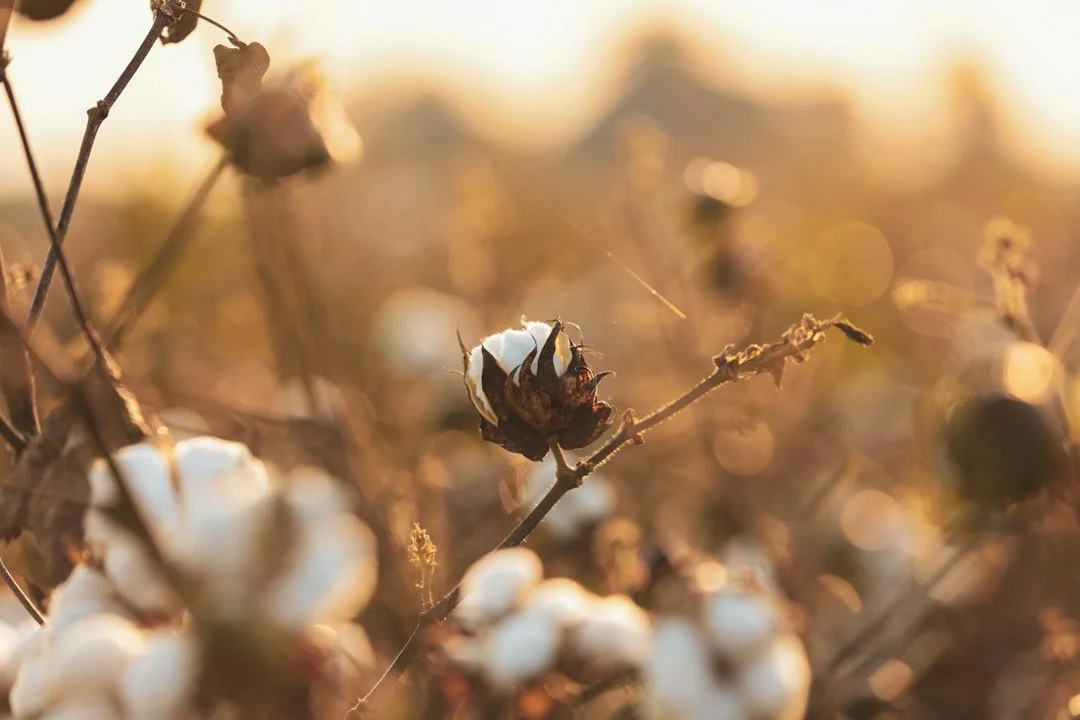
During the Great Depression cotton sales in the South plummeted from 40¢ per pound to 5¢. It was this turn, in a long string of turns, in which Wilcox County, Alabama was declared the poorest of the poorest counties in the United States. In the center of the county lies Gee’s Bend. The people of this community, almost all of whom are, still to this day, descendants of the 100 original slaves owned by plantation owner, Mark Pettway were known, in the mid 1930’s, to experience the deepest poverty. Gee’s Bend became a focus for Roosevelt’s New Deal and The Resettlement Administration and the American Agricultural Act. LEARN MORE.
For a tiny patch of a community, it seems to have a magnetism for attention. In February of 1965 just weeks before Selma, Alabama’s historic Bloody Sunday, the Student Nonviolent Coordinating Committee identified Gee’s Bend as a location for Martin Luther King Jr. to visit. He addressed a full house of 300 at Pleasant Grove Baptist Church.
“I come over here to Gee’s Bend tonight to tell you that you are somebody! I come over here tonight to tell you that you are God’s children. And that every man from a bass black to a treble white is significant on God’s keyboard. Don’t let anybody make you feel that you don’t count … I want you to know that you are somebody, and you are as good as any white person in Wilcox County!” - Martin Luther King Jr.
Following his visit, young Mary Lee Bendolph risked it all with her mother to march with King in Camden, Alabama. “She recalled him drinking from a whites-only fountain. ‘I never saw a black person do a thing like that,’ she told a reporter from the Los Angeles Times. ‘I was so glad’.” [soulsgrowndeep.org]
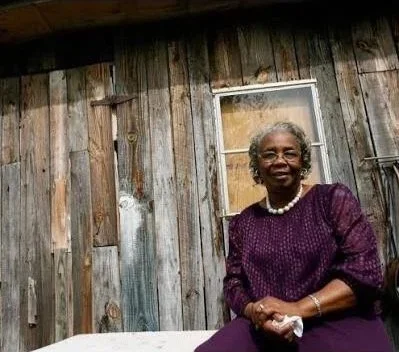
Mary Lee Bendolph. (I do not own the rights to this photograph. It is borrowed from souls grown deep foundation.)
It is this Mary Lee Bendolph, whose salvaged scraps are hand-pieced into the quilt “Housetop” variation.
“When I would start piecing a quilt I’d just sit there and pray. Sometimes I cry, sometimes I sing and they give me joy. They do that. But I sit there piecing that quilt and they give me a little joy, just to sit there and sing and pray. Talk to the Lord, tell him all because he know he brought me from a long way.” - Mary Lee Bendolph
“Housetop” variation is one of hundreds of quilts featured in the PBS documentary, “The Quiltmakers of Gee’s Bend” (Award-winning PBS Feature) she is laughing in the film… ”I can’t even quilt straight”. The women interviewed had never even heard the word, “artwork”. And when asked if they considered themselves artists they would definitively answer “no”. “We’re just doing this because it comes naturally.” Without patterns or fabric stores, these quilters were sewing into form their own spirits. These quilts were made to keep their children warm. The pieces were salvaged from cotton, canvas, crop sacks, corduroy and the clothing of their deceased loved ones. Abstracted expressions inspired from the housetops, the gardens, the wells, and the fields they knew. These quilts are love letters of woven experience.
This is brilliance.
Bendolph goes on to say, “Yeah, before he [Bill Arnett] came down, we would get $5 a quilt. He told me I could get $2,000, but I hadn’t never sold one for $2,000 yet. One was $12.50, and the other one was $15.50”.
Bill Arnett [1939-2020] was the founder of Souls Grown Deep Foundation. Since its establishment, the foundation has placed over 400 pieces by 110 artists in numerous high-profile collections around the country, including the Metropolitan Museum of Art, the Brooklyn Museum, the National Gallery of Art, Philadelphia Art Museum, the Museum of Fine Arts in Boston, and the Phillips Collection.
It is at the Phillips Collection that “Housetop” variation has found its museum home. It is this piece of art that I am inspired by to lead today’s meditation for The Phillips Collection’s monthly online Art & Wellness Club.
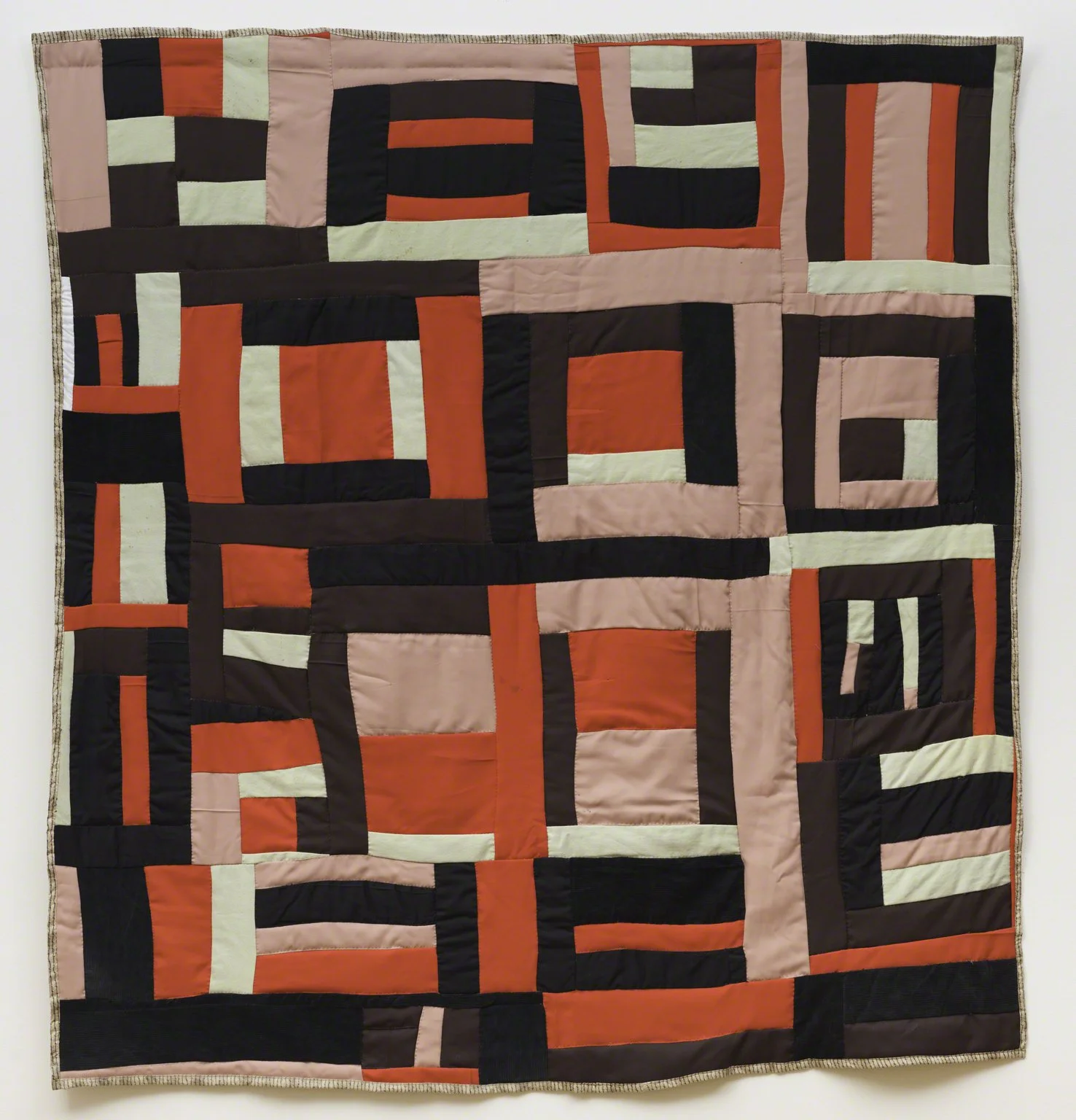
Mary Lee Bendolph, “Housetop” variation, 1998, Cotton corduroy, twill, assorted polyesters, 72 x 76 in., The Phillips Collection, Partial Gift, Partial purchase from Souls Grown Deep Foundation. The Dreier Fund for Acquisitions, 2019 (I do not own the rights to this photograph, it is copied from The Phillips Collection website for event registration.)
So, how does the Yoga I practice and the meditation I will guide today tuck into a piece of art that reflects such resilience?
When I look at the abstract design and know this was not influenced by any preexisting art. This quilt expresses life not just through symbolism, but retains life because of its sheer nature to hold itself together through careful stitches, sewn with courage and the quilter’s devotion to God.
In Yoga study, the Rigveda explains sound communication, vāk. It has four stages: para, pashyanti, madhyama, and vaikhari. They develop from the most subtle vibration of consciousness, let’s call it pure potential (para), to the early stages of inner movement, lets call it the seed of idea (pashyanti), then it exists in the mind, let’s call it a central thought or the formation of a sentence (madhyama), to finally (vaikhari) the spoken sound that you can hear. And, this is not limited to just human speech, all of nature expresses sound this way. Everything from the wind whistling through the leaves to the morning call of a rooster.
As a Yoga educator and artist, I often have to hold myself back from haphazardly declaring that all of life is Yoga and all that we experience is art - that would undermine the sacredness of both. But when I think of the quilts that have been crafted in Gee’s Bend Alabama, I am immediately reminded of this 4 stage teaching on sound. What is being expressed through the form of a quilt, which we now regard as celebrated art, started as a much more subtle seed of possibility.
My studies in Yoga have taught me how to receive all communication, from spoken to seen with my whole being. It is the subtle, formless, current of energy that runs through an artwork that Yoga has given me access to. Different than resonating with the artist’s statement or admiring their craftsmanship, I am learning to sense in silence.
This silence is room enough for the interconnected seed within me to be flamed into my own courage to create.
This is why I believe The Phillips Collection has formed the Art & Wellness Club. Rising above the ignorant notion that art is to be consumed, instead offering a pathway to experience our own wholeness which is necessary to fully participate in art.
It is my responsibility, as a collaborator, to mindfully guide the patrons to relax, relinquish distraction, and open their hearts as they ready themselves to sense “Housetop” variation and learn about Mary Lee Bendolph. Just a few minutes of preparing to be receptive can surprisingly expand into an edgeless swath of time that seems slow and sweet. In that state, taking in art becomes an expedition into the same faith, patience, courage, prayer, and song that Bendolph has stitched.
It is the intersection of stillness and vibration that makes the play of life so glorious.
I lead monthly meditations for the Phillips Collection on the 2nd Wednesday of the month from 12 - 12:30. It’s online and totally free. Join me
NOVEMBER 11 “Housetop” variation by Mary Lee Bendolph
DECEMBER 9th The Country A Wilderness Unsubdued by Zoë Charlton
JANUARY 13th Ancestor by Seymore Lipton
Sources:
https://imprimis.hillsdale.edu/tarnished-gold-fifty-years-of-new-deal-farm-programs/
https://encyclopediaofalabama.org/article/new-deal-in-alabama/
https://yogainternational.com/article/view/4-degrees-of-human-speech